

[**Disclosure – Incident Report Data May Be Incomplete or Unverified. A reporting entity is required to submit an incident report within a certain time from when it receives notice of a crash that may be reportable. This report is required regardless of whether the reporting entity has verified or agrees with the information. Therefore, initial reports may reflect incomplete or unknown information. A reporting entity that receives new or additional information after the initial report is submitted is required to submit an updated report but is not required to take additional affirmative actions to gather further details.]
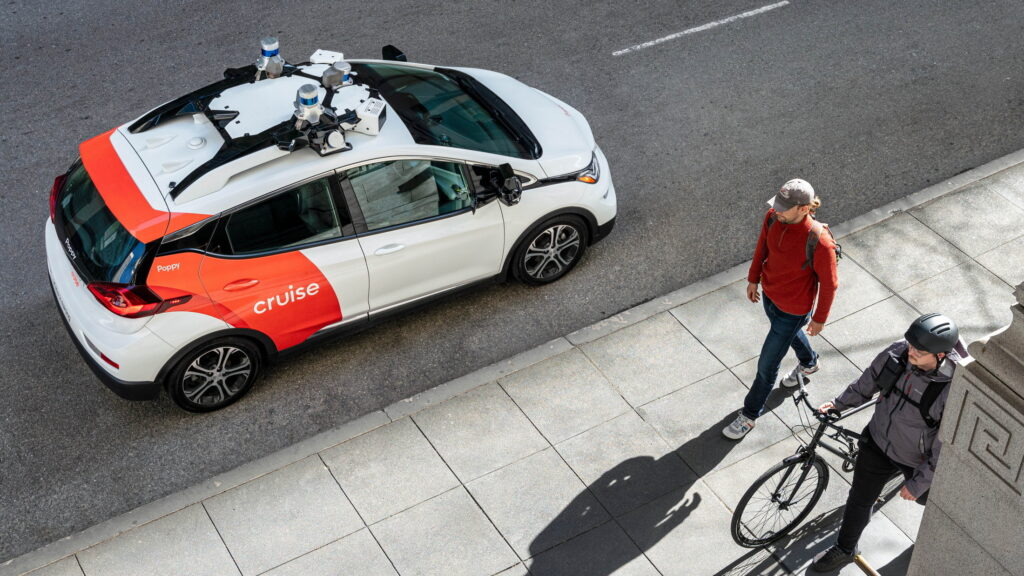
The National Highway Traffic Safety Administration (NHTSA) has opened a preliminary evaluation into the way that Cruise’s autonomous vehicles interact with pedestrians. The action follows a widely publicized incident in which one of the company’s vehicles struck a pedestrian, who had first been hit by another driver.
The incident occurred on Monday, October 2, when a woman in San Francisco was hit by a vehicle with a human driver, and thrown into an adjacent lane, where she was struck again by a Cruise autonomous vehicle that could not stop in time. Authorities say they struggled to free the woman, who suffered life-threatening injuries, from under the second vehicle.

However, that was not the only incident NHTSA cited as a reason for opening the preliminary evaluation. The federal regulator said that it had received two relevant reports involving pedestrian injuries from Cruise (including the above-mentioned incident), and is aware of two additional incidents from videos posted online.
Cruise Autonomous Car Runs Over Pedestrian That Had Just Been Hit By Another Driver
The National Highway Traffic Safety Administration today released its early estimates of traffic fatalities for the first half of 2023, estimating that traffic fatalities declined for the fifth straight quarter. An estimated 19,515 people died in motor vehicle traffic crashes, representing a decrease of about 3.3% as compared to 20,190 fatalities in the first half of 2022. Fatalities declined in both the first and second quarters of 2023.
Continuing the trend identified in the first quarter estimates released in June, preliminary data shows vehicle miles traveled in the first half of 2023 increased by about 35.1 billion miles, roughly 2.3% higher than the same time last year. More miles driven combined with fewer traffic deaths resulted in a fatality rate of 1.24 fatalities per 100 million VMT, down from the projected rate of 1.31 fatalities per 100 million VMT in the first half of 2023.
“After spiking during the pandemic, traffic deaths are continuing to slowly come down—but we still have a long way to go,” U.S. Transportation Secretary Pete Buttigieg said. “Safety has always been the core mission of this Department, and thanks to President Biden, we are delivering unprecedented resources to communities across the country to make their streets safer.”
NHTSA estimates a decrease in fatalities in 29 states, while 21 states, Puerto Rico, and the District of Columbia, are projected to have experienced increases.
In Fiscal Year 2023, states received $886 million in highway safety formula grants and are using those funds to address risky driving behaviors, protect vulnerable road users, and engage new partners to strengthen their programs.

KEY FEDERAL AGENCIES
Although NHTSA has broad regulatory authority over the safety of passenger vehicles, it is the FTC that is the primary federal agency responsible for protecting consumer privacy. The FTC and NHTSA staff meet, coordinate, collaborate and communicate frequently on privacy issues related to motor vehicles, including those involving new technologies such as connected and automated safety systems. In June 2017, the FTC and NHTSA jointly held a well-attended workshop in Washington, DC, to examine the consumer privacy and security issues posed by automated and connected motor vehicles. For information,visit: FTC website.
DATA GENERATED BY VEHICLES
Personal Data In Your Car (PDF, 830KB)
Data and the Connected Car (PDF, 220KB)
NHTSA welcomes feedback on the draft content of its Vehicle Data Privacy web page. The Agency will accept suggestions and comments via email to NHTSAPrivacyCounsel@dot.gov.
**Additional information – The Same Crash May Have Multiple Reports For crashes involving an ADS vehicle that meet reporting requirements of the General Order, the reporting entity may be required to submit multiple reports for a single crash (an initial report, a 10-day followup, and any subsequent updates). In addition, more than one entity may be responsible for reporting the same crash. The vehicle manufacturer, ADS developer or operator of the ADS vehicle may all be named in the General Order. This means that a single crash may have multiple reports from multiple entities. Consequently, the overall number of reports submitted does not equate to the total number of incidents and is not a meaningful safety metric.


