
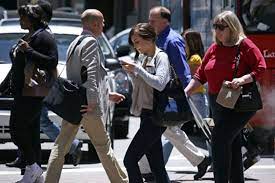
Distracted driving has been a major concern for road safety experts and policymakers. However, a new problem is emerging on the streets – distracted walking. Distracted walking is when a pedestrian doesn’t pay attention to their surroundings. It can happen at any age and can lead to serious injuries, including fractures, traumatic brain injuries, and even death.
The Governors Highway Safety Association (GHSA) has identified this growing problem as a significant threat to pedestrian safety. According to the GHSA report “Distracted Walking: A Growing Problem,” pedestrians who are distracted by their phones, music players, and other electronic devices are at a higher risk of being involved in accidents.
Some examples of distracted walking include:
- Talking on your phone
- Texting
- Watching videos
- Listening to music
- Wearing headphones
- Using a cell phone or other electronic device
The report indicates that between 2010 and 2015, pedestrian fatalities increased by 25 percent. The GHSA attributes this increase in part to the rise in distracted walking. In addition, the report highlights that the number of pedestrians who were admitted to emergency rooms due to injuries related to phone use while walking increased by 124 percent between 2010 and 2014.
The report also identifies the age group most at risk of distracted walking. It found that individuals aged 15 to 19 were most likely to be injured while walking and using their phones. This age group is also the most likely to use their phones while walking, with 56 percent of high school students admitting to texting or emailing while crossing the street.
The GHSA report offers several recommendations to address the problem of distracted walking. The first and most crucial recommendation is education. It suggests that public education campaigns should be launched to raise awareness about the dangers of distracted walking. These campaigns should target not only pedestrians but also drivers, who need to be aware of the risks posed by distracted pedestrians.
Some dangers of distracted walking include:
- Missing lightsA distracted walker might miss a light that changes or a car that shifts direction.
- Not following crosswalk guidelinesA distracted walker might not be as likely to follow guidance measures like staying in the crosswalk lines.
- Walking into trafficA distracted walker might walk into traffic, causing a collision with a car.
- Being hit by other vehiclesA distracted walker might be hit by another motorist or an accident with another vehicle while crossing.
- Legal liabilityA distracted walker can sometimes have legal liability if someone gets hurt because they are not paying attention.
The report also suggests that cities and towns should consider implementing laws to discourage distracted walking. For example, some cities have already introduced fines for texting while crossing the street. The report argues that such measures can be effective in reducing the number of accidents caused by distracted walking.
Here are some tips to avoid distracted walking:
- Make eye contact with drivers of oncoming vehicles
- Be aware of drivers even when you’re in a crosswalk
- Don’t wear headphones while walking
- Never use a cell phone or other electronic device while walking.
The report calls for further research into the problem of distracted walking. It suggests that more data is needed to better understand the causes and consequences of distracted walking and to develop effective strategies to address this growing problem.
The GHSA report “Distracted Walking: A Growing Problem” highlights the dangers posed by distracted walking to pedestrian safety. The report demonstrates that distracted walking is a rapidly growing problem, and it recommends education, legislation, and research to address this issue. By working together, we can reduce the number of injuries and fatalities caused by distracted walking and create safer streets for everyone.


