



Look before you lock your car.
Make it a habit to look before you lock your car, and try these tips to avoid putting children at risk of electrocution by lightning strike or heatstroke.
Keep your vehicle locked and keep your keys out of reach; nearly 3 in 10 heatstroke deaths happen when an unattended child gains access to a vehicle.

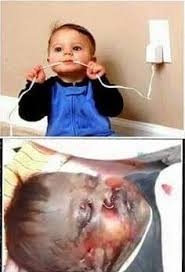

TAKE ACTION if you notice a child alone in a car!
Protecting children is everyone’s business—learn what to do if you see a child alone in a car and the child is injured.



Here’s a crash course on infant CPR in case of lightning strike electrocution.
Turn off the source of electricity, if possible. If not, use a dry, nonconducting object made of cardboard, plastic or wood to move the source away from you and the injured person.
Begin CPR if the child shows no signs of circulation, such as breathing, coughing or movement.
Here’s a quick Infant or Baby CPR Video
Now, Take Our Electrical Safety Quiz
1. Where does electricity always want to go, even if it means traveling through a person?
Answer:
(Electricity always returns to the source of the power supply (a transformer or substation). Electric current will use the paths of least resistance to return to the source. Electrical systems and supply systems are grounded to the earth. Grounding is necessary to ensure safety and reliability.)
2. A shock from an outlet at home may be painful, lead to collapse, or even death. True or False
Answer: True
(Electric shock can cause direct injuries such as electrical burns, arc burns, and thermal contact burns. It can also cause injuries of an indirect or secondary nature in which involuntary muscle reaction from the electric shock can cause bruises, bone fractures, and even death resulting from collisions or falls..)
3. Which part of the human body offers the most electrical resistance.
Answer:
(More than 99% of the body’s resistance to electric current flow is at the skin. Resistance is measured in ohms.)
4. Flammable materials can easily be ignited by
electricity.? True or False
Answer: True
(Static electricity can easily ignite a flammable material.)
5. Only workers are permitted to work on or near exposed electrical components? True or False
Answer: True
(Only qualified and trained workers can repair or troubleshoot electrical equipment.
6. When should power tools and extension cords be inspected.
Answer:
(Power tools should be inspected before each use. If there are any defects, such as insulation missing from the cord or a piece of the protective shell broken, the tool must be taken out of service until repaired.)
7. Fuses and circuit breaker are designed
to protect people from shocks? True or False
Answer: True
(By quickly interrupting the current flow, fuses and circuit breakers help to mitigate the risk of electric shock and protect individuals from harm.)
8. When a circuit breaker trips, you should immediately reset it? True or False
Answer: False
(A tripped breaker could indicate a problem, so it should be checked by a qualified worker.)
9. Extension cords should never be used as a permanent power source? True or False
Answer: True
(Never Use Extension Cords as Permanent Wiring. Use extension cords only to temporarily supply power to an area that does not have a power outlet. Keep extension cords away from heat, water and oil. They can damage the insulation and cause a shock.)
10. What should be done with a damaged power tool or extension cord?
Answer:
(If there are any defects, such as insulation missing from the cord or a piece of the protective shell broken, the tool must be taken out of service until repaired. Tag the drill out of service and notify the department responsible for equipment.)
What You Need to Know, Now.
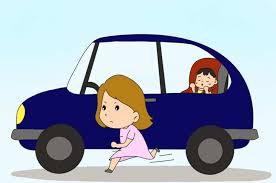


It is never okay to leave a child alone in or around a car for any reason.
Both are caused by your toddler getting too hot and becoming dehydrated, which can involve the sun but doesn’t always,’ explains consultant paediatrician Dr Rahul Chodhari from the Royal College of Paediatrics and Child Health. ‘Heat stroke develops from heat exhaustion.’
And little ones are more vulnerable for several reasons.
‘Babies have a larger surface area in relation to their size, which means they lose water faster,’ says Dr Chodhari. ‘Their skin is thinner so they can’t regulate their own body temperature in the same way adults can, and of course young children can’t (or don’t) always tell you when they’re thirsty.’
Watch a physician explain an infant heatstroke
Take this quiz to test how much you know about preventing child heatstroke.
Take the Heat Stroke Quiz:
A hot summer day can be just as deadly as a chilly winter one for older adults. Take this quiz to see how much you know about heat stroke and heat exhaustion.
1. Heat exhaustion and heat stroke mean the same thing.
A. True
B. False
Answer: False
(Heat exhaustion is a warning that your body is becoming overheated. Signs of heat exhaustion include heavy sweating, paleness, muscle cramps, fatigue, dizziness, headache, nausea or vomiting, and fainting. If you don’t get help, you may get a heat stroke.)
2. Heat-related illness is only a concern if the temperature reaches 100°F (37.8°C).
A. True
B. False
Answer: True
(Symptoms of heat stroke include high body temperature, dry skin (no sweating), rapid pulse, headache, nausea, altered mental status, seizures, and unconsciousness. Get medical help right away if someone has these symptoms. 2. Heat-related illness is only a concern if the temperature reaches 100°F (37.8°C).
3. Having high blood pressure increases your risk of developing a heat-related illness.
A. True
B. False
Answer: True
(You are at higher risk of developing heat-related illness if you’re following a salt-restricted diet because of high blood pressure. Don’t take salt pills without checking with your doctor. Older adults taking multiple medicines also are at higher risk for heat-related illness.)
4. If you’re overweight, you’re at higher risk of developing a heat-related illness.
A. True
B. False
Answer: True
(Older adults, children and sick or overweight individuals are at greater risk from extreme heat. Humidity increases the feeling of heat.)
5. The only way to keep cool when it’s hot indoors is to use a fan or air conditioner.
A. True
B. False
Answer: False
(Although fans and air conditioners work best, if you don’t have either, you can still take steps to keep cool. Open windows at night to let cool air in. If possible, open windows on two sides of the house to allow a cross-flow of air. Keep blinds, drapes, or shades pulled during the hottest part of the day.)
6. If your house is hot in the summer, a good place to seek relief is the public library.
A. True
B. False
Answer: True
(If your home does not have air conditioning, go to a shopping mall or public library. Even a few hours spent in air conditioning can help your body stay cooler when you go back into the heat.)
7. It’s harder for older people to tell when they’re overdressed for the weather.
A. True
B. False
Answer: True
(Older adults often have poor circulation, and their sweat glands don’t work as well as they did. Stick with lightweight, loose-fitting cotton clothing. Light-colored clothing also helps because it will reflect some of the sun’s heat. Also wear a wide-brimmed hat to keep the sun off your face.)
8. Headache, nausea and fatigue are common symptoms of heat-related illness.
A. True
B. False
Answer: True
(Symptoms of heat exhaustion also include a lot of sweating, dizziness, and cold, clammy skin. The pulse is usually fast and weak.)
9. One of the first steps to treat heat exhaustion is to get the person into a cool place.
A. True
- Symptoms of heat cramps
B. False
Answer: True
(If possible, also have the person lie down and rest. Offer the person cool water or fruit juice. Don’t give the person beverages that contain caffeine or alcohol. Sponging off with cool water will also ease symptoms.)


Even in cooler temperatures, your vehicle can heat up to dangerous temperatures very quickly.
An outside temperature in the mid-60s can cause a vehicle’s inside temperature to rise above 110 degrees Fahrenheit.
The inside temperature of your car can rise almost 20 degrees Fahrenheit within the first 10 minutes.
Heatstroke does not only occur during the summertime or in the Sun Belt States.
This deadly issue can occur at any time of year, in any weather condition, in any community—for any parent.
Watch this informative video about looking beforehand
Symptoms of heat-related illness
The symptoms of heat-related illnesses can vary, but may include:
- Muscle pains
- Spasms in the abdomen, arms or legs
- Symptoms of heat exhaustion
- Sweating
- Pale complexion and sweating
- Rapid pulse
- Muscle cramps, weakness
- Dizziness
- Headache
- Nausea, vomiting
- Fainting
- Symptoms of heat stroke
- Very high body temperature
- Red, hot, dry skin (no sweating)
- Dry swollen tongue
- Rapid pulse
- Dizziness
- Headache
- Nausea, vomiting
- Confusion
- Seizure
- Loss of consciousness
Where to get help?
- Call 911
- In an emergency, call triple zero (000)
- Your GP (doctor)
- NURSE-ON-CALL, Tel. 1300 60 60 24 – for expert health information and advice (24 hours, 7 days)
Here’s another video:


