

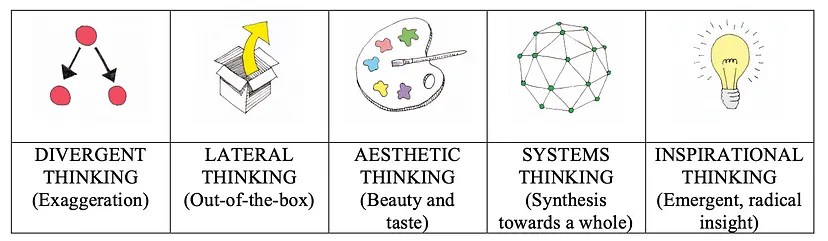
The creatively powerful solutions to extremism are rooted in a vision of a better world. Instead of knee-jerk flag-waving and submission to any act of repression in the name of “national interests.” -Robin D. G. Kelley, “Freedom Dreams” Convergent versus Divergent Thinking, brings our communities together to explore the imagination and visions of activists and intellectuals who have imagined a liberated future without oppression.
In a convergent future, people would be united by a shared vision of what a better world looks like, and they would work tirelessly to make that vision a reality.
What if we lived in a world where everyone shared the same values and beliefs?
Communities would be built on a foundation of cooperation and collaboration, and people would put aside their personal interests to prioritize the greater good.
What if we all worked together towards a common goal, without the distractions of social, economic, or political differences?
It’s a compelling vision, and one that challenges us to find common ground with those around us, even if we don’t always agree with them.
What would a world devoid of oppression look like?
It’s a question that has fascinated thinkers and visionaries for centuries.
In a liberated future, people would be free to express themselves and live their lives without fear of discrimination or persecution.
They would be able to pursue their passions and interests without being held back by social, economic, or political constraints.
Communities would be built on mutual respect and understanding, and people would work together to solve problems and create a better world for future generations.
It’s a beautiful vision, and one that we should always strive for.
In a divergent future, people would be free to express themselves in any way they choose, and their differences would be seen as strengths, not weaknesses.
What if we lived in a world where being different was celebrated, not punished?
What if we could all pursue our passions and interests without being judged or held back by society’s expectations?
Communities would be built on a foundation of diversity and acceptance, and people would work together to create a world where everyone has an equal opportunity to thrive.
It’s a thrilling vision, and one that challenges us to break free from the constraints of conformity and embrace our individuality.
Emphasizing the need for collective action and hope, while consistently pointing to shared visions of a better future individually, means real progress is possible.
Imagining A Liberated Future Without Oppression.
- People have tried and are changing the world.
- History and causes teach the world.
- Our present condition explains how feelings, thoughts and movements shape our future.
- Human evolutionary movements lead to anti discrimination, antiracism, antisexism, and anti wage retaliation.
- Transformation sparks reimaged public transportation policy and pedestrian safety
Very clearly with refined and defined insight, the subjects of PACE TULSA writings, as well as, PACE TULSA civic experiences shows that a secret Othello Syndrome, permeates within our communities.
A narrative of anonymity is also prevalent. All desires, hopes, and intentions of the people who struggle to change injust systems cannot be easily labeled, charted, catered, or explained.
Convergent and divergent liberation are two contrasting approaches to achieving social justice and equality.
Convergent liberation is based on the idea that people should come together to work towards a common goal, putting aside their individual differences and focusing on the greater good.
This approach emphasizes cooperation and collaboration, with communities built on a foundation of shared values and beliefs. In a convergent future, people would work tirelessly towards a vision of a more just and equal world.
Visionaries highlight the importance of dreaming and imagination in those struggling for control over their own self-constitution. Mediation and conversations about liberation catalyze change.
W.E.B. Du Bois, Martin Luther King Jr. and Angela Davis liberation ideologies, as well as, the experiences of grassroots activists and community organizers, illustrate political motivations leading to change.
- Influential thinker W.E.B Du Bois primarily targeted racism in his polemic, which protested strongly against lynching, Jim Crow laws, and discrimination in education and employment. His cause included people of color everywhere, particularly Africans and Asians in colonies.
- Influential thinker Martin Luther King Jr. King Jr.s tenants are primarily expressed in two different principles. Principle One: Nonviolence is a way of life for courageous people. It is active nonviolent resistance to evil. It is aggressive spiritually, mentally and emotionally. Principle two: Nonviolence seeks to win friendship and understanding.
- Influential thinker Angela Davis. As early as 1969, Davis began public speaking engagements. She expressed her opposition to the Vietnam War, racism, sexism, and the prison–industrial complex, and her support of gay rights and other social justice movements.
The most compelling and thought-provoking ideas inspire pedestrian awareness crosswalk education, and safety advocates to imagine a better world and take action to make that vision a reality.
Divergent liberation, on the other hand, celebrates differences and recognizes that people have unique experiences and perspectives.
This approach emphasizes the need to embrace diversity and promote inclusivity, recognizing that social justice and equality cannot be achieved through a one-size-fits-all approach.
Divergent liberation recognizes that different groups face different challenges and works to address those challenges in a way that is tailored to the specific needs of each group
The experiences of grassroots activists and community organizers illustrate political motivations leading to change.
- Formed coalitions
- Conducted walkability-studies
- Collected community data
- Held education events
- Encourage, or engaged pedestrian safety
- Made a transportation safety plan
- Focused on pedestrian commuter health
- Focused on modal transit accessibility
- Raised money for transportation policy
- Promoted transportation policy
- Engineering Infrastructure changes
- Social media transportation safety outreach
While convergent liberation emphasizes unity and collaboration, divergent liberation celebrates diversity and recognizes the importance of individual experiences and perspectives.
Both approaches have their strengths and weaknesses, and the best approach may depend on the specific context and goals of a given movement.
The key to achieving social justice and equality may be finding a balance between these two approaches, recognizing the importance of both conversion and divergent thinking while examining unity and diversity in our modern communities.
Question Bombing
How do we produce a vision that enables us to see beyond Othello Syndrome and Anonymity? How do we transcend bitterness and cynicism and embrace love, hope, and an all encompassing dream of freedom, especially in these rough times?What had happened to the dream of liberation that brought many of us to radical movements in the first place?What happened to republicanism the way we imagined? What happened to our dreams of building a better society? What happened to hope and love in our
politics?


