
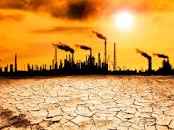
The world is currently facing a global warming crisis that is having devastating effects on our planet. The burning of fossil fuels and deforestation have led to an increase in the concentration of greenhouse gases in the atmosphere, which is causing the Earth’s temperature to rise. This temperature rise is leading to more extreme weather conditions and rising sea levels, which are threatening the survival of many species.
The impact of global warming is being felt around the world, with some regions experiencing more severe effects than others. In some areas, droughts are becoming more frequent and severe, while other regions are experiencing more intense hurricanes and typhoons. The melting of glaciers and ice caps is also contributing to rising sea levels, which is causing flooding in many coastal cities.
To combat global warming, we must reduce our greenhouse gas emissions. This can be achieved through a variety of means, including transitioning to renewable energy sources such as solar and wind power, reducing car usage through public transportation, and increasing energy efficiency in buildings. Additionally, reforestation efforts can help to absorb some of the excess carbon dioxide in the atmosphere.
The international community has recognized the importance of addressing global warming.
The Paris Agreement, signed in 2015, aims to limit global warming to below 2 degrees Celsius above pre-industrial levels. Many countries have also committed to reducing their greenhouse gas emissions, although some have been slow to take action.
Global warming is a significant threat to our planet, and urgent action is needed to combat it. By reducing our greenhouse gas emissions and promoting sustainable practices, we can help to mitigate the effects of global warming and ensure a healthy planet for future generations.
The United States has implemented new policies aimed at reducing global CO2 emissions by 50% by the year 2023.
These policies are part of the country’s efforts to combat climate change and address the urgent need for action to reduce greenhouse gas emissions.
One of the key policies is the promotion of renewable energy sources such as wind and solar power.
The government is investing heavily in research and development to improve the efficiency and affordability of these energy sources and is offering incentives to businesses and individuals.
Another policy is the promotion of energy efficiency in buildings.
The government is encouraging the use of energy-efficient appliances and lighting and is offering tax incentives to businesses and individuals who invest in energy-saving technologies.
The United States is also committed to reducing emissions from the transportation sector.
The government is promoting the use of electric and hybrid vehicles and is investing in public transportation infrastructure to reduce car usage.
In addition to these policies, the United States is working with other countries to promote global cooperation on climate change.
The U.S. is a signatory to the Paris Agreement, and is committed to working with other countries to reduce global greenhouse gas emissions. The Paris Agreement is an unprecedented framework for global action. We know because we helped design it and make it a reality. Its purpose is both simple and expansive: to help us all avoid catastrophic planetary warming and to build resilience around the world to the impacts of climate change we already see.
These policies are an important step in the fight against climate change, but more needs to be done to address this urgent issue.
It is important for individuals and businesses to take action to reduce their own carbon footprint, and for governments around the world to work together to implement effective policies to combat climate change.

 PACE TULSA