

“An Aware Pedestrian, is someone who identifies with being part of an emerging crosswalk education health conscious community, and whose actions contribute to developing this community’s constitution; government and economy through participation and practice.”
Terence Morris, Author & Founder, PACE TULSA AGS FOUNDATION. 2018

MODULARISM: THE MODES OF THE PROVISIONING OF SPECIFICITY-SURVEYS IN A COMPARATIVE PERSPECTIVE
PACE TULSA AGS FOUNDATION is an online think-tank intersecting transportation policy in the United States.
Part of our initial assessments of various implementation programs began by exploring the ways in which we thought about pedestrian awareness.
PACE TULSA AGS FOUNDATION began in 2013, employing a specificity-survey Modular Platform. Our modular ideology evolves intellectually as public-policy processes begin to affect stimulated attitudinal changes unilaterally across emerging private-sector economies.
Omni-channel strategies to secure consumer loyalty plays a part in asset allocation decision-making. These strategies also create competition for content purchasers’ asset allocation decisions. Those initial observations of how neighborhood communities came to buyer’s decisions resonated with our neighbors in the Tulsa, Oklahoma community. It is possible to overcome “the process of visibility” problems some pedestrian awareness crosswalk education organizations face.

Modular Platform Methodology
The analytical tools associated with qualitative research methodology include a host of techniques and strata-logic.
PACE TULSA decided to adopt a wide-range of various types of methods: in-depth interviews, focus groups notes, and field observations. Additionally, paradigm frameworks made up of assumptions about subject matter and the ways transportation policy and pedestrian awareness should be studied.
The methods and data that are considered to be legitimate are all employable research and analytical tools that have help our organization to find valuable insight.

Experiments
Experiments are used to try to discover if there are causal relationships between variables. If, for example, the variable we are interested in is the time taken for pedestrians to react to an on-coming vehicle, we could manipulate the driver-vehicle noise levels driving by in their cars to see whether this has any impact. In this case, the noise level of the driver-vehicle will be the independent variable and the driver’s response time (a behavior which we hypothesize is dependent on driver-vehicle noise levels) will be the dependent variable. This sort of experiment may take place in a driving simulator, in a laboratory, or on private roads. In an experiment, there are often two groups of participants: a control group that is not subjected to the manipulation of the independent variable and an experimental group that is subjected to manipulation.

In the example here, the control group may not be subjected to any driver-vehicle noise. Findings from experiments are analyzed statistically. Researchers using experimental methods have a number of techniques at their disposal to ensure that they do not simply find what they expect or what they want to find. These include random allocation to groups where the researcher does not choose whether a participant goes into the experimental or control group, and blind scoring, where those who score a participant’s behavior do not know the participant group.

Surveys
If we are interested in what people think or feel, or in behaviors that are difficult to observe, we ask questions. Variant introspection, means researchers are not looking inside themselves, but are evaluating other people’s introspections. Researchers do this through both questionnaires and interviews.

Questionnaires
Questionnaires are written questions designed to elicit short answers or choices between options. They can be completed with a vast number of people in a study. Questionnaires are tightly structured. Questions are asked in an invariant order and often with the range of possible answers decided in advance so that the data can easily be entered into a computer for statistical analysis. A researcher does not need to be present with the respondent.

Interviews
Interviews are face-to-face conversations between a researcher and an interviewer or group of interviewees. Since they are face-to-face, samples used are usually smaller than questionnaires. Interviews can be tightly structured (as for questionnaires) or more open-ended. They can, therefore, be analyzed either quantitatively (i.e. the information is in a form that can be counted or expressed numerically and which is amenable to statistical manipulation) or qualitatively (i.e. the information is expressed in terms of descriptive qualities, attributes, characteristics, and so on), where researchers transcribe tape-recordings of the interviews, read them repeatedly and analyze their themes.

Standardized tests
Standardized tests are different from ordinary questionnaires in the way they are constructed and pre-tested. They are tried out on large numbers of people before being used as research or diagnostic tools. This gives a picture of how the test scores are distributed across the population for which the test is designed. It is, therefore, possible to compare a particular individual’s test scores with the average from the population and to make statistical comparisons between different groups. Well-known psychological tests include intelligence tests and personality tests. These are highly structured forms of self-report where participants have to solve problems or choose from fixed alternatives on a questionnaire. Researchers then work out a score for each participant that gives information about their intelligence or personality.

Observations
Observations are the most direct method of getting information about people’s behavior. In everyday life we all frequently observe other people. There is a range of methods for systematically observing other people. These range from participant observation through to highly structured and targeted observations.

Participant observation
In participant observation, the researcher is part of what is being observed and writes up notes whenever possible. Sometimes these notes include an insider viewpoint account of how the researcher is feeling. A well-known example is that of Rosenhan and seven collaborators in the 1970s who, although not ill, feigned mental illness and managed to get themselves admitted to a psychiatric hospital (Rosenhan, 1973). Once in the hospital they behaved ‘normally’, i.e. as they would in the outside world. They kept notes of all they observed (outsider viewpoint) and what they experienced (insider viewpoint), including the experience of having their ‘normal’ behavior and talk interpreted as evidence of their mental illness. (They had a lot of trouble getting discharged from the hospital.) The data from observations such as these are analyzed qualitatively, paying attention to meanings and to the place of the researcher in the observation.

Structured observations
In more structured observations, researchers may have clear categories of behavior on which they know they want to focus. They may choose a specific individual such as a target child in a school, perhaps counting the number of times that child makes a friendly approach to another child and noting down what is said. They may also observe through a one-way mirror so that they are not visible to the people being observed and, hence, do not interfere with whatever is being observed. These kinds of observations can be analyzed either quantitatively and statistically, or qualitatively.
Meaning and language-based methods
Language is an important product of the human mind and once language data are created – such as the texts people have written, what they have said (recorded and transcribed) – they can be studied and analyzed quite separately from the particular minds that created them. These kinds of data are used to provide evidence of meanings, and the processes that construct and communicate meanings. There are various ways in which researchers analyze conversations, data from interviews and written texts.

Content analysis
This is a popular method which involves counting up the prevalence and sequencing of certain words, sentences, expressions, metaphors, and similar, in texts such as newspaper articles or transcripts of interviews. It can also be used to identify the types of explanations people give for their own behavior or use in order to persuade people to support them or agree with their argument. It is predominantly a quantitative method.

Discourse analysis
Another popular method is discourse analysis. This is a qualitative method that provides detailed analyses of exactly what language is used and how it is used. For example, discourse analysts would try to identify the rhetorical devices by which we all as speakers seek to persuade each other of our arguments, and the functions served by various discourses. Discourse analysts do not aim to find an absolute truth about how people use language. They are more interested in the processes whereby people construct meanings socially and individually. Most discourse analysts are interested in subjectivity – people’s own sense-making – and often include an analysis of the researcher’s own subjective understandings as part of the analysis of data, thus using a mixture of insider and outsider viewpoints. Discourse analysis is an example of a hermeneutic approach. Hermeneutic approaches focus on meaning-making; that is, the work of interpretation. People are treated as meaning-producers, with the task of the investigator being to interpret meanings. Hermeneutic approaches, therefore, tend to use qualitative methods (rather than measuring variables, taking group averages and drawing conclusions with the help of statistics as in experimental and other quantitative methods). The data they produce tend to relate to particular individuals in specific contexts, rather than generalizing to a population as a whole.

Different paradigms and different methods
The different methods described above alert us to the fact that social scientific research is not just one enterprise, but a series of interlocking enterprises in which researchers have different views about the best ways to try to understand or explain people and their behavior and experience. These are arguments about epistemology; that is, what questions to ask, what sort of evidence to look for, what sort of criteria to use to evaluate explanations, and what sort of methods to use.
All knowledge and all efforts to gain knowledge operate in a context, a set of connected and compatible assumptions about what exists and the way to gain knowledge of it. And we have already seen that research is done within a paradigm, which is a philosophical framework made up of assumptions about the subject matter and the ways in which it should be studied, including the methods and the kinds of data that are considered to be legitimate.
This leads to debates between social scientists operating in different paradigms, as Peter Barnes explains, “By now you will have gathered that there is no one methodological approach to the study of topics in social science – each approach has its advocates and each has attracted its critics. At any one time some approaches are in the ascendant while others are in the doldrums. Different views exist on what subjects are worthy of investigation – and even on whether it is possible to investigate them – and these, too, have fashions.” (Barnes, 1985:28)
CERTIFIED CHANGE MANAGEMENT LEADERSHIP

All efforts to acquire knowledge take place within a specific context that is comprised of interconnected and compatible assumptions about the nature of the subject matter and the techniques used to study it. Research is inherently done within a paradigm, which is essentially a philosophical framework that delineates the assumptions about the subject of study, the methodology, and the types of data that are considered acceptable. This often leads to debates between social scientists who operate within different paradigms and may hold diverging views about the worthiness of certain subjects of investigation and the possibility of conducting research on them. As Peter Barnes explains, various methodological approaches exist in social science, and each has its advocates and critics. Moreover, different paradigms gain or lose popularity over time, and opinions about the feasibility and importance of various research topics are also subject to trends and shifts in thinking. (Barnes, 1985:28)

Peter Barnes, the entrepreneur and author of the recently published book, Ours The Case for Universal Property, talks about how new conceptions of property – a universal commons – could fundamentally transform capitalism to make it more ecologically and socially sustainable.

We would like our community partnership to thrive by fostering growth and development opportunities in the continued education area. Therefore, it is our pleasure to introduce our latest project. You’re going to be asked 15 questions “arranged out of logical context” to assess your understanding of Six Images of Change Management. The images are Director, Navigator, Caretaker, Coach, Interpreter, and Nurturer.
- Do people usually have one primary perspective on change management? What factors influence the development of different perspectives? In my opinion, individuals tend to have one dominant image of change management. However, as they gain more experience, skills, and knowledge, they may develop different perspectives on the topic. Exposure to various work environments and cultures can also influence the development of multiple perspectives on change management.
- Can change leaders achieve greater success by sticking to their dominant leadership style? What are the reasons for and against this approach? Change leaders may achieve greater success by remaining faithful to their dominant leadership style, as this approach allows them to draw upon their strengths and expertise. By sticking to what they know best, they can create a clear vision, set achievable goals, and motivate their team to achieve them. However, there are also reasons against relying solely on a dominant leadership style. Change is constantly evolving and requires leaders to adapt their approach to meet the needs of the situation. By being too rigid in their style, leaders may miss opportunities for growth and fail to address emerging challenges. Therefore, it is important for change leaders to remain open to new ideas and be willing to adjust their approach when necessary.
- Is it more likely for change leaders who can apply various images to be successful? What are the reasons for and against this approach? Change leaders who can apply various images are more likely to be successful. This is because they have a range of tools at their disposal to approach different situations. By being adaptable, they can tailor their approach to meet the specific needs of their team and organization. However, there are also reasons against this approach. If leaders are constantly switching between images without a clear direction or purpose, they may confuse their team and create a lack of trust. Therefore, it is important for change leaders to be intentional in their use of different images and to communicate their reasoning clearly to their team.
- Do managers possess enough behavioral flexibility to switch between different styles or do they tend to stick to one or limited approaches? Please provide your explanation? In my opinion, while some managers may have the ability to move between different styles, many tend to stick with one or a limited range of approaches. This may be due to a variety of reasons, such as personal preferences, past experiences, or lack of exposure to different styles. However, it is important for managers to recognize the limitations of their preferred style and be willing to adapt their approach to meet the needs of their team and organization. By being open to new ideas and approaches, managers can enhance their effectiveness and achieve greater success in leading change.
- Who are viewed as “Most people” in A Change Management Process? In “most people” most qualify the non-specific group. When you talk about a large group, you should use “most”. For instance, most people know English. Most doctors lead a busy life.
- What does having one dominant image of change management mean? According to Palmer, Dunford, and Buchanan (2016), identified the six images of a change manager as a director, interpreter, navigator, coach, caretaker and nurturer. A change leader must exhibit all six of these roles, which are not separate categories. Instead, they form two continua, from controlling to shaping management roles and implementing outcomes that vary from planned to unintended. The boundaries of these six images are blurred, and their elements may overlap in practice (Palmer, Dunford, & Buchanan, 2016). Although one or more of the six images may be more pronounced than the others, a transformational change leader is able to balance the mix.
- Define Change Leader? A Change leader as someone who has the knowledge, mindset, and behaviors to lead, manage, and influence organizational change. Change Leaders take the reigns and empower the people in the organization by managing the process. A good Change Leader is key to making a positive difference.
- What does being faithful in business mean? Every job has aspects that are preferable over others. A faithful worker is willing to complete the job regardless of their personal preferences. They carry out tasks they dislike with the same level of energy & excellence as the tasks they enjoy.
- What is a Dominant Style? Dominance style individuals often prefer strong directive management and operational tendencies. They tend to work quickly and impressively by themselves. They try to shape their environments to overcome obstacles en route to accomplishments.
- When someone has the “capacity to do something” what’s involved? Capacity means the ability to use and understand information to make a decision, and communicate any decision made. A person lacks capacity if their mind is impaired or disturbed in some way, which means they’re unable to make a decision at that time.
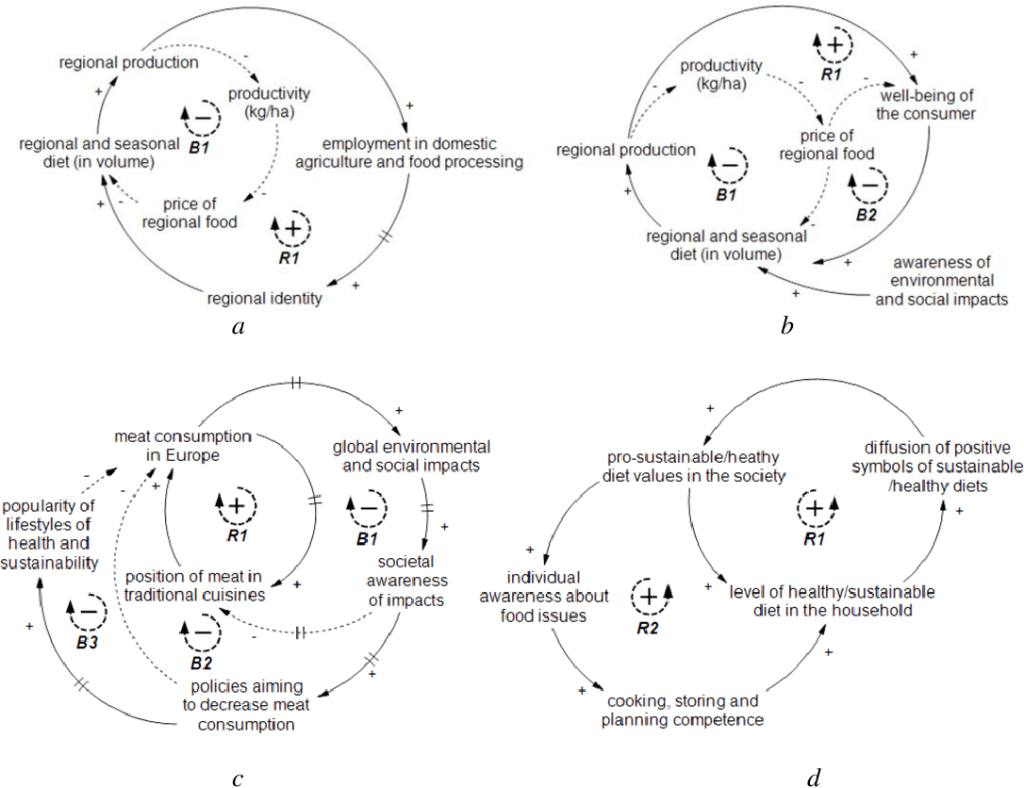
- Making a judgment about something means?” A decision or opinion about someone or something that you form after thinking carefully
- Describe a ”Manager who has behavioral flexibility?” Flexible leaders are those who can modify their style or approach to leadership in response to uncertain or unpredictable circumstances.
- Describe “The Process of Moving Between Different Styles?” Research by Drs. Rooke and William R. Torbet suggests “The internal action logic of a leader is what determines their interpretation of their own or other people’s behavior and what they do to maintain power or remedy threats.”
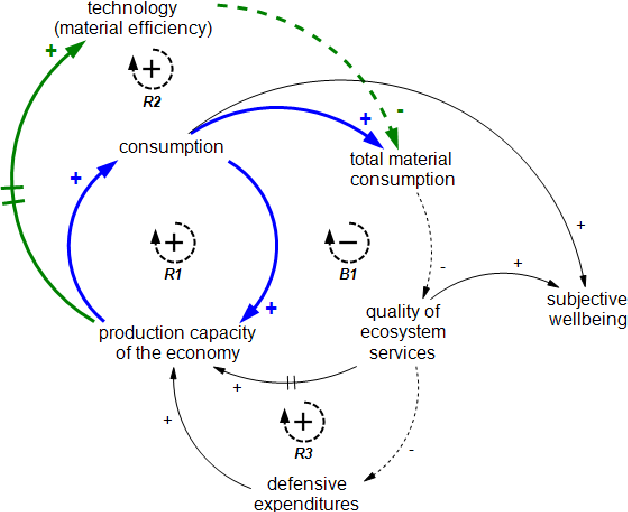
- What is the primary approach to limited range applications?” The Capability Approach focuses directly on the quality of life that individuals are actually able to achieve. This quality of life is analyzed in terms of the core concepts of ‘functioning’s’ and ‘capabilities’. Functioning’s are states of ‘being and doing’ such as being well-nourished, having shelter. Capability refers to the set of valuable functioning’s that a person has effective access to. A person’s capability represents the effective freedom of an individual to choose between different functioning combinations – between different kinds of life – that she has reason to value.
- Define “Successful?” Successful is the state or condition of meeting a defined range of expectations and results.
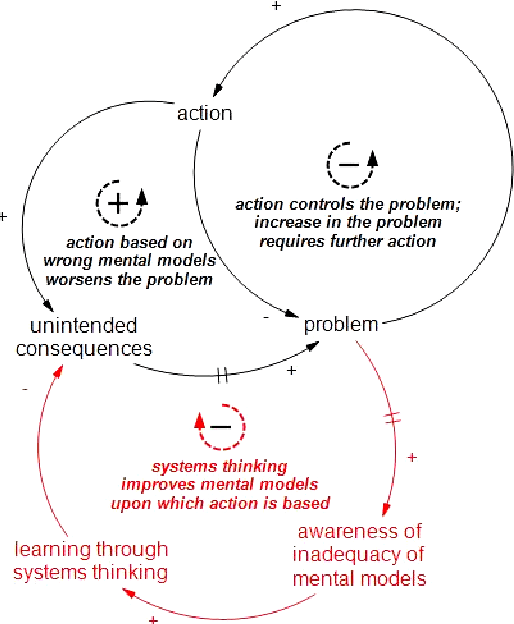
After the quiz can you see yourself as a certified change management professional administrator?

Today, that methodology has evolved into an open-source learning technology that provides comprehensive interaction with crosswalk-intersection education modularity participants on our media platforms. Our 24/7/365 Open Access Content Moodle is a Learning Management System (LMS) used to manage, deliver and measure training and learning online.
Change Leadership Management Certification study course guide
Course Syllabus: Change Leadership Management Certification
Course Description:
This course is designed to provide students with a comprehensive understanding of Change Leadership Management and its’ role in developing collaborative leadership.
Students will explore various approaches to change management, including the collaborative leadership model, and will learn how to effectively lead and manage change initiatives within an organization.
Course Objectives:
– Understand the principles of change leadership management and its role in organizational success
– Develop skills in collaborative leadership, team-building, and communication
– Learn how to create a culture of change within an organization
– Gain knowledge of different approaches to change management and how to select the most appropriate approach for a given situation
– Develop the ability to effectively lead and manage change initiatives within an organization
Course Duration:
8 weeks (self-paced)
Course Materials:
– Articles, research papers, and essays on change leadership management and collaborative leadership
– Online webinar, biopics, blogs and PowerPoint presentations and Vimeo; YouTube; Ted Talk motivational/ educational speeches and forum videos on change management leadership certification will also be available.
– Homework assignments
Course Outline:
Week 1: Introduction to Change Leadership Management
– What is change leadership management?
– Why is change leadership management important?
– Key principles of change leadership management
Week 2: Collaborative Leadership
– What is collaborative leadership?
– Characteristics of collaborative leaders
– Benefits of collaborative leadership
Week 3: Creating a Culture of Change
– How to create a culture of change within an organization
– Strategies for overcoming resistance to change
– Building a sense of urgency around change initiatives
Week 4: Approaches to Change Management
– Different approaches to change management
– Selecting the most appropriate approach for a given situation
– Advantages and disadvantages of each approach
Week 5: Team-Building and Communication
– How to build effective teams for change initiatives
– Communication strategies for leading change initiatives
– Overcoming common communication barriers
Week 6: Leading and Managing Change Initiatives
– Developing a vision for change
– Creating a plan for implementation
– Ensuring effective communication and execution of the change initiative
Week 7: Measuring and Evaluating Change Initiatives
– How to measure the success of change initiatives
– Evaluating the effectiveness of change management strategies
– Making adjustments based on feedback and evaluation
Week 8: Final Project and Certification
– Completion of a final project that demonstrates understanding of change leadership management and collaborative leadership
– Certification awarded upon successful completion of the course
Course Requirements:
– Access to a computer with internet connection
– Basic understanding of organizational management and leadership
– Willingness to learn and actively participate in the course
Donation Event:
Ask about our donation event to support the free open-access platform online 24/7/365. The donations will be used to further develop and enhance the course material and provide additional resources to students.
- How to deliver an effective presentation
- Convergent versus divergent training
- Quality service
- Cross-cultural management
- Three core coaching skills
- Motivation and performance.
- Managing employees
- How to deliver effective presentations
- Leading Across Cultures
- Leading teams for managers and
- A Guide to developing collaborative leadership.
- Change management tools
- Leading organizational change
- Strategic change initiatives
- The Harvard principles of management,
- Negotiation skills: Resolving Disputes by Mediation
- Navigating power relationships
- Translating important strategic operational decisions quickly
- An open discussion about power relationships
- An open discussion about power
For more information how you can enroll today our email address is: information@pacetulsa.com
References
Barnes, P. (1985) E206 Personality, Development and Learning, Unit 1, Raising Questions Milton Keynes: The Open University.
Sherrat, N., Goldblatt, D., Mackintosh, M. and Woodward, K. (2000) DD100 An Introduction
to the Social Sciences: Understanding Social Change, Workbook 1, Milton Keynes, The
Open University.
Rosenhan, D. (1973) ‘On being sane in insane places’ Science 179, 250–8.
Acknowledgements
[Information last accessed: 27 July 2017]
This article draws on ‘Psychology in the 21st century’. An Open Learn http://www.open.edu//openlearn/) chunk reworked by permission of The Open University copyright © 2016 – made available under the terms of the Creative Commons License v4.0 http://creativecommons.org/licenses/by-nc-sa/4.0/deed.en_GB. As such, it is also made available under the same license agreement.


One thought on “PaSec | Program Systems Educational Thinking”