
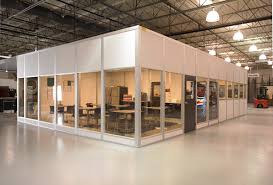
Essentially, these are workspaces that can be easily reconfigured to meet the changing needs of the people using them. This approach to workspace design is gaining traction because it offers many benefits for both employees and employers.
One of the primary benefits of modular working environments is the flexibility they provide. With modular workspaces, it is easy to adapt the space to changing needs, whether that is accommodating new hires, changing project requirements, or simply responding to shifts in work patterns. This flexibility can help to boost productivity, as employees can work in an environment that is tailored to their needs.
Another key benefit of modular working environments is the way they enable employees to stay connected through shared experiences, interests, and priorities. By allowing employees to work in a shared environment, modular workspaces foster a sense of community and collaboration that can help to build stronger and more productive teams. This can lead to increased employee engagement, better communication, and improved morale, all of which are crucial for a successful and healthy workplace.
Modular working environments offer many benefits for employers and employees alike. They are flexible, and adaptable, and foster collaboration, making them an ideal choice for modern workplaces. By providing a workspace that is tailored to the needs of the people using it, modular workspaces can help to create a more productive, engaged, and connected workforce.
Modular working environments have been a topic of interest for researchers and organizations offering flexible and adaptable spaces where employees work.
Several studies have been conducted to investigate the impact of modular working environments on various aspects of organizational performance.
A study by Hua and Johansson (2016) found that organizations that implemented modular workstations reported an increase in productivity and employee satisfaction. The study also highlighted the importance of providing employees with a variety of work settings to choose from, as it helped to reduce distractions and increase focus on tasks.
Another study by Kim and de Dear (2013) examined the impact of modular office design on employee satisfaction and found that employees who worked in modular offices reported higher levels of job satisfaction, compared to those who worked in traditional offices. The study attributed this to the flexibility and adaptability of modular office designs, which allowed employees to personalize their work environment to suit their individual needs.
In terms of organizational performance, a study by Knight and Haslam (2010) found that modular office designs were associated with increased levels of organizational commitment and job performance. The study suggested that modular office designs promoted a sense of community and collaboration among employees, which in turn led to improved organizational outcomes.
Modular working environments have a positive impact on productivity, employee satisfaction, and organizational performance. However, more research is needed to fully understand the benefits and limitations of modular office designs, as well as the factors that influence their effectiveness in different organizational contexts.
Modular working environments are designed to offer flexibility, customization, and scalability to meet the changing needs of the people using them. These key features are what make modular workspaces so popular.
Flexibility is a key feature of modular working environments. This means that the workspace can be easily reconfigured to meet the changing needs of employees. For example, if there is a need to create a meeting space, the modular furniture can be easily rearranged to create a space for collaboration.
This flexibility can help to boost productivity, as employees can work in an environment that is tailored to their needs.
Customization is another important feature of modular working environments. This means that the workspace can be personalized to suit the individual needs of the employees. For example, an employee who needs a quiet space to focus on work can use a modular workstation with soundproofing capabilities.
Customization can help to improve employee satisfaction and engagement, as employees feel that their needs are being considered and met.
Scalability is the third key feature of modular working environments. This means that the workspace can be easily expanded or contracted as needed. For example, if there is a need to accommodate more employees, modular workstations can be added to the workspace.
On the other hand, if there is a need to reduce the size of the workspace, the modular furniture can be easily reconfigured to create a smaller workspace. This scalability can help organizations save money by reducing the need for expensive office renovations.
The flexibility, customization, and scalability of modular working environments are what make them attractive as an option for modern workplaces. These key features allow organizations to create a workspace that is tailored to the needs of employees which can help to improve productivity, employee satisfaction, and engagement.

 PACE TULSA