

The city of Tulsa, Oklahoma offers a variety of services to support individuals experiencing homelessness, which include shelters, social services, and other organizations. The case we are all waiting to see is the Johnson v. City of Grants Pass. It is reported to be one of the most significant cases on homelessness to reach the Supreme Court.
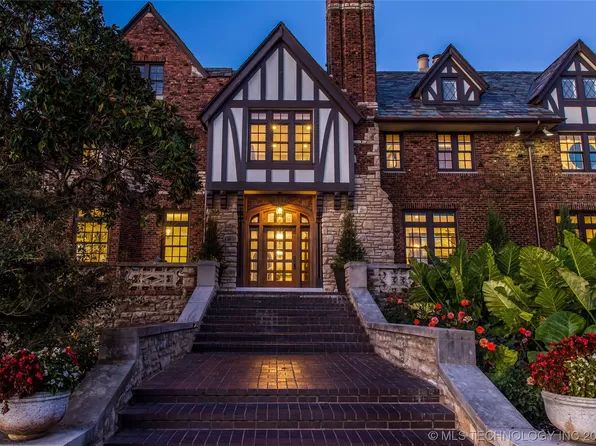
by pacetulsa

Grants Pass has no public shelter, but its local law enforcement essentially banned people from sleeping with a blanket or pillow on any public land, at any time. During arguments on Monday April 22, 2024 the Supreme Court’s more liberal justices suggested the Oregon Pass Case to unlawfully target people simply because they’re homeless. “You don’t arrest babies who have blankets over them. You don’t arrest people who are sleeping on the beach,” said Justice Sotomayor.
The Warren Court, which served from 1953–1969, was known for its liberal ideology and landmark decisions in areas such as civil rights, separation of church and state, and police arrest procedures.
The Warren Court, known for its progressive approach to civil rights, would likely interpret the criminalization of homelessness as a violation of the Eighth Amendment’s prohibition against cruel and unusual punishment. They would likely see the enforcement of criminal ordinances that punish homeless individuals for existing in public spaces as a form of discrimination and a violation of their basic human rights. The court’s tenants include:
- Ending racial segregation. The Warren Court ended racial segregation in public schools with the Brown v. Board of Education decision
- Expanding defendant rights. The court expanded the constitutional rights of defendants with rulings such as Gideon v. Wainwright (1963) and Miranda v. Arizona (1966), which guaranteed due process of law to all citizens
- Ensuring equal representation. The court’s “one person, one vote” decisions eliminated disparities in people’s ability to elect their representatives
- Outlawing state-sponsored prayer. The court outlawed state-sponsored prayer in public schools
- Protecting political dissidents. The court protected political dissidents and stated that open debate is a central commitment of a democratic government
- Protecting minority groups. The court protected the rights of racial minority groups and members of minority religious groups
- Protecting against unreasonable searches and seizures. The court ruled in Mapp that evidence found during an unconstitutional search is inadmissible in court, which incentivized authorities to comply with the Fourth Amendmen
The 2018 Martin vs. Boise decision by the Ninth Circuit Court of Appeals aligns with this interpretation, as it recognizes that homeless individuals have the right to exist in public spaces and cannot be punished for doing so when there is no available shelter. Overall, the Warren Court would likely prioritize protecting the civil rights and liberties of homeless individuals over criminalizing homelessness.
Justice Kagan said sleeping is not a criminal act. “Sleeping is a biological necessity. It’s sort of like breathing. … But I wouldn’t expect you to criminalize breathing in public.” But the court’s conservative justices said it can be hard to draw the line between someone’s conduct — which can be legally punished — and a status they are unable to change — which cannot be punished.
“How about if there are no public bathroom facilities?” Justice Gorsuch asked. “Do people have an Eighth Amendment right to defecate and urinate? Is that conduct or is that status?”
Over and over, conservative justices also said homelessness is a complex policy problem and questioned whether courts like theirs should “micromanage” homelessness.
Homelessness is a widespread social issue that affects marginalized populations globally. To address this issue, since 2023, the city has allocated $125.7 million towards housing, homelessness, and mental health services. Additionally, A Better Way, the City’s panhandling diversion program, has served 2,675 homeless residents since 2020, and the City of Tulsa has permitted 1,437 new housing units since 2023.
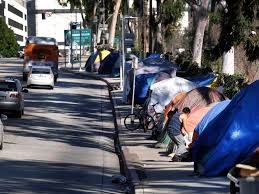
On April 17, 2024, Oklahoma lawmakers approved Senate Bill 1994, which permits law enforcement to remove squatters immediately upon the request of a property owner. Supporters of the bill argue that it protects property rights and avoids prolonged litigation to remove trespassers. However, critics contend that it further criminalizes homelessness, and it may result in police using excessive force when interacting with unhoused people with mental illness.
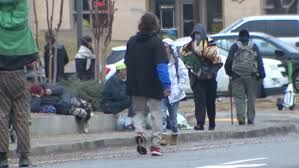
The Lawyers’ Committee for Civil Rights Under Law argues that fining, ticketing, or arresting unhoused people, which would be more easily possible if Grants Pass is overturned, would make it harder for homeless people to obtain permanent housing. Having a criminal record can make it difficult for individuals to secure jobs, stable housing, and government benefits.
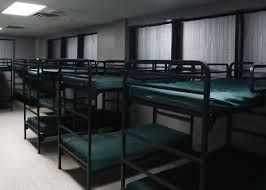
To address this issue, several organizations, including Family Promise of Tulsa County, Mama’s Transitional Housing, and A Better Way, provide services for people experiencing homelessness in Tulsa. The city’s new Housing Director, Becky Gligo, created the Affordable Housing Strategy to address homelessness, making homelessness in Tulsa brief, rare, and non-recurring.
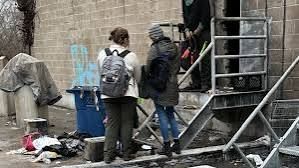
To achieve proactive compassion, we must bridge income gaps through our employee labor force, create a safe and dignified human space where everyone has a place to call home and embrace change to make a meaningful difference in the lives of those who need it most. By working together, humanity can create a world where homelessness is not a reality.

The case of Grants Pass vs. Johnson is the most important dispute over homelessness to come before the high court.
The justices will meet behind close doors on Thursday to vote on how to decide the case, and they are likely to hand down a ruling in late June.


