
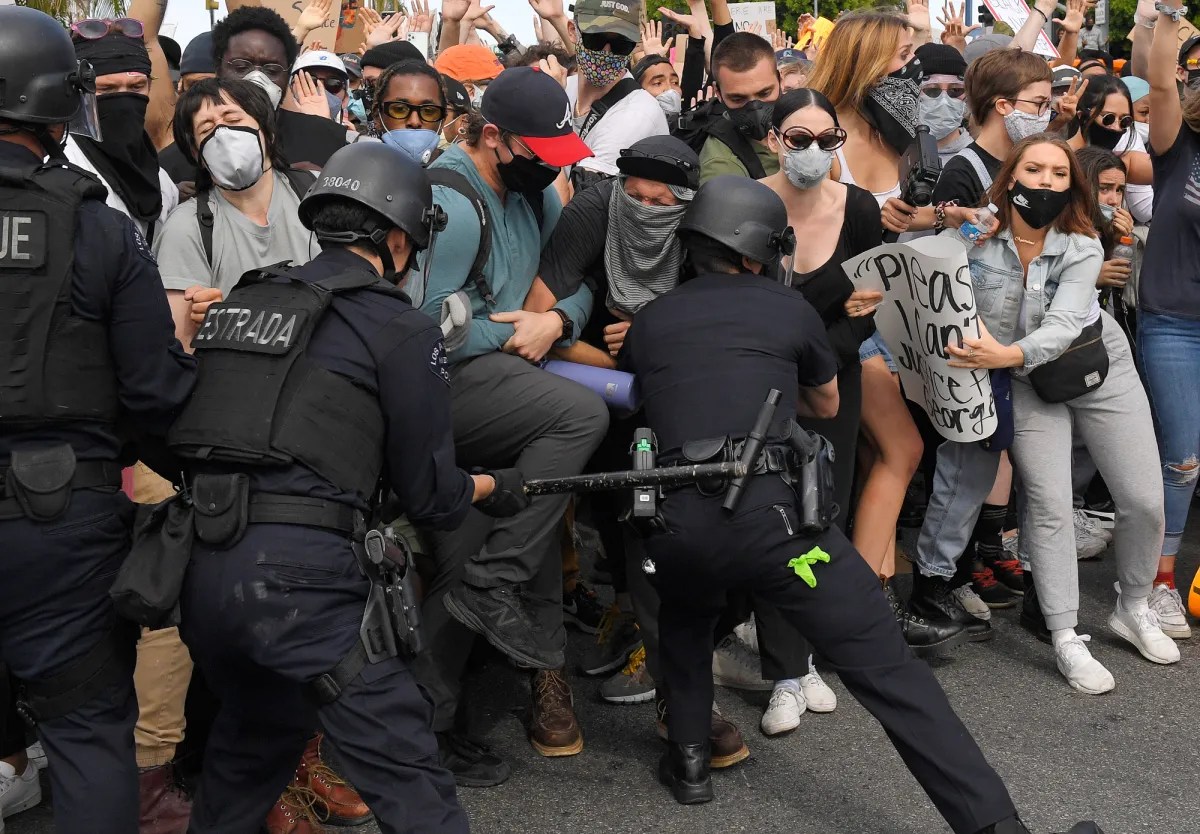
FEDERAL LAWS THAT ADDRESS POLICE MISCONDUCT INCLUDE BOTH CRIMINAL AND CIVIL STATUTES.
These laws cover the actions of State, county, and local officers, including those who work in prisons and jails. In addition, several laws also apply to Federal law enforcement officers. The laws protect all persons in the United States (citizens and non-citizens).
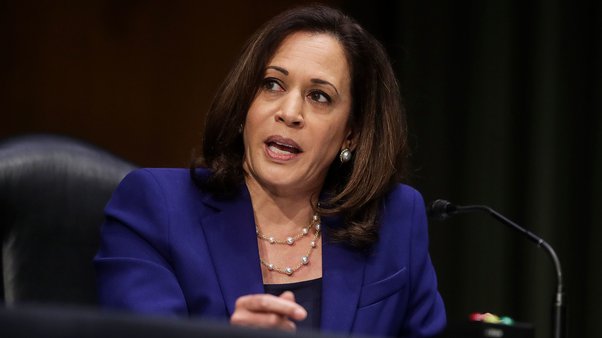
Vice President Kamala Harris said incidents of police shootings and alleged police brutality are a “different issue. There’s got to be an independent investigation conducted from the first moments of the incident, so that we can be certain and sure that there has been a thorough investigation that is not informed by bias and so that there will be justice for all of the people concerned.”
Empirically, Harris’s campaign has pushed back on criticism, pointing to her initiatives as attorney general to start the first statewide implicit bias and procedural justice training, requiring body cameras for Justice Department agents, and push for data on in-custody deaths and police shootings to be made publicly available.
What is the difference between criminal and civil cases? Criminal and civil laws, are different. Criminal cases usually are investigated and handled separately from civil cases, even if they concern the same incident. In a criminal case, DOJ brings a case against the accused person; in a civil case, DOJ brings the case (either through litigation or an administrative investigation) against a governmental authority or law enforcement agency.
In a criminal case, the evidence must establish proof “beyond a reasonable doubt,” while in civil cases the proof need only satisfy the lower standard of a “preponderance of the evidence.” Finally, in criminal cases, DOJ seeks to punish a wrongdoer for past misconduct through imprisonment or other sanction. In civil cases, DOJ seeks to correct a law enforcement agency’s policies and practices that fostered the misconduct and, where appropriate, may require individual relief for the victim(s).
Federal Criminal Enforcement
It is a crime for one or more persons acting under color of law willfully to deprive or conspire to deprive another person of any right protected by the Constitution or laws of the United States. (18 U.S.C. §§ 241, 242). “Under color of law” means that the person doing the act is using power given to him or her by a governmental agency (local, State, or Federal). A law enforcement officer acts “under color of law” even if he or she is exceeding his or her rightful power.
The types of law enforcement misconduct covered by these laws include excessive force, sexual assault, intentional false arrests, theft, or the intentional fabrication of evidence resulting in a loss of liberty to another.
Enforcement of these provisions does not require that any racial, religious, or other discriminatory motive existed.
What remedies are available under these laws? These are criminal statutes. Violations of these laws are punishable by fine and/or imprisonment. There is no private right of action under these statutes; in other words, these are not the legal provisions under which you would file a lawsuit on your own.
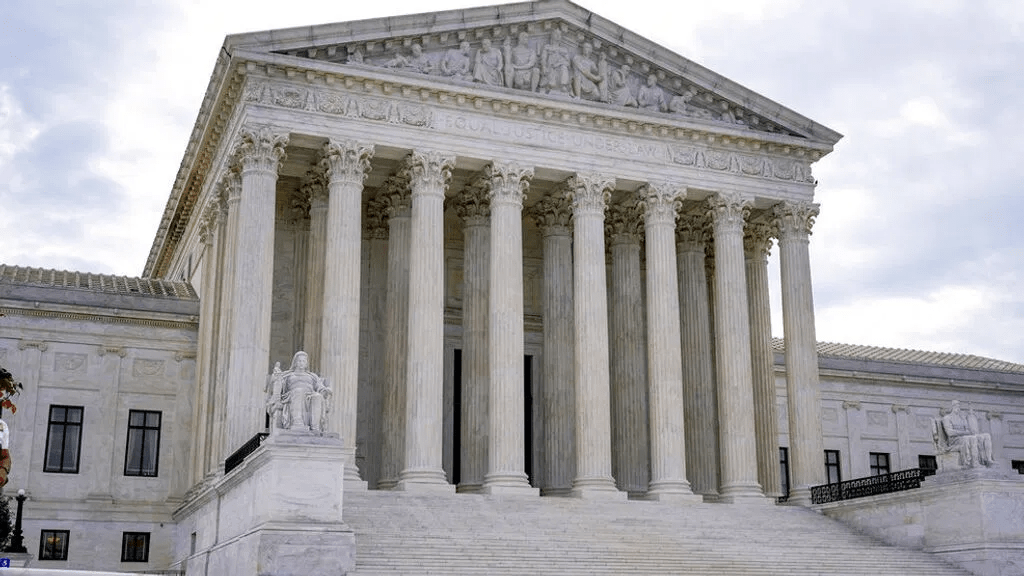
SUPREME COURT OF THE UNITED STATES
CITY OF TAHLEQUAH, OKLAHOMA, ET AL. v. AUSTIN
P. BOND, AS SPECIAL ADMINISTRATOR OF THE ESTATE OF
DOMINIC F. ROLLICE, DECEASED
ON PETITION FOR WRIT OF CERTIORARI TO THE UNITED
STATES COURT OF APPEALS FOR THE TENTH CIRCUIT
No. 20–1668. Decided October 18, 2021

On August 12, 2016, Dominic Rollice’s ex-wife, Joy, called Rollice was in her garage, she explained, and he was intoxicated and would not leave. Joy requested police assistance; otherwise, “it’s going to get ugly real quick.” 981 F. 3d 808, 812 (CA10 2020). The dispatcher asked whether Rollice lived at the residence. Joy said he did not but explained that he kept tools in her garage.

Officers Josh Girdner, Chase Reed, and Brandon Vick responded to the call. All three knew that Rollice was Joy’s ex-husband, was intoxicated, and would not leave her home.

Joy met the officers out front and led them to the side entrance of the garage. There the officers encountered Rollice and began speaking with him in the doorway. Rollice expressed concern that the officers intended to take him to jail; Officer Girdner told him that they were simply trying to get him a ride. Rollice began fidgeting with something in his hands and the officers noticed that he appeared nervous. Officer Girdner asked if he could pat Rollice down for weapons. Rollice refused. Police body-camera video captured what happened next.

As the conversation continued, Officer Girdner gestured with his hands and took one step toward the doorway, causing Rollice to take one step back. Rollice, still conversing with the officers, turned around and walked toward the back of the garage where his tools were hanging over a 911 call.  Officer Girdner followed, the others close behind. No officer was within six feet of Rollice. The  video is silent, but the officers stated that they ordered Rollice to stop. Rollice kept walking. He then grabbed a hammer from the back wall over the workbench and turned around to face the officers. Rollice grasped the handle of the hammer with both hands, as if preparing to swing a baseball bat, and pulled it up to shoulder level. The officers backed up, drawing their guns. At this point the video is no longer silent, and the officers can be heard yelling at Rollice to drop the hammer.  He did not. Instead, Rollice took a few steps to his right, coming out from behind a piece of furniture so that he had an unobstructed path to Officer Girdner. He then raised the hammer higher back behind his head and took a stance as if he was about to throw the hammer or charge at the officers. In response, Officers Girdner and Vick fired their weapons, killing Rollice.  Rollice’s estate filed suit against, among others, Officers
Girdner and Vick, alleging that the officers were liable under 42 U. S. C. §1983, for violating Rollice’s Fourth Amendment right to be free from excessive force.
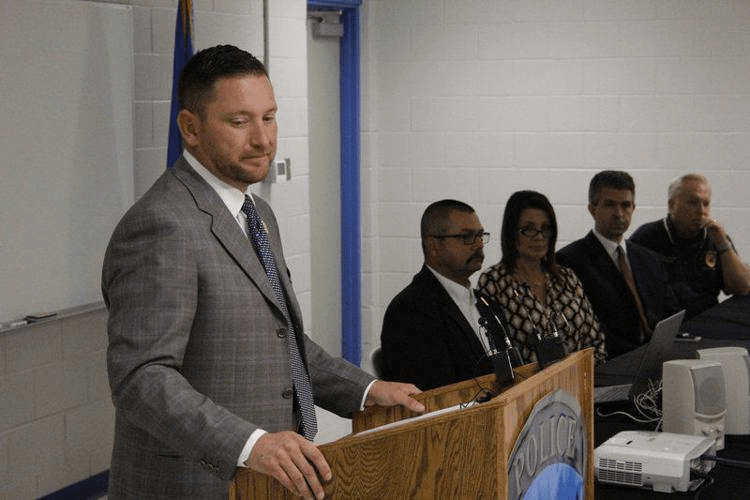
In two isolated unsigned opinions on Monday, October 18, 2021, the Supreme Court ruled in favor of police officers seeking qualified immunity from allegations of excessive force.
In both cases, the justices overturned lower court decisions that went against the officers. The rulings — and the fact that no justice publicly dissented — suggests that the court is not willing, at least for now, to radically transform how it considers qualified immunity cases.
Qualified immunity is a legal doctrine, developed by the courts, that shields law enforcement from liability for constitutional violations including allegations of excessive force.
In recent years, legal scholars, lawmakers and judges have criticized the doctrine, arguing that it is not grounded in the proper legal authorities and too often shields officials from accountability. Calls for the court to take a substantial new look at the doctrine intensified after the killing of George Floyd in 2020.
Under existing precedent, an officer is not liable, even if he or she violates the Constitution, unless it was “clearly established” by prior cases that the conduct at issue was unconstitutional. Critics say that bar is too high and forces those claiming excessive force to search for a prior case with nearly identical facts.


2 thoughts on “Overturning Law Enforcement Grant of Excessive Police Powers Will Not Net Widen Lawlessness”