
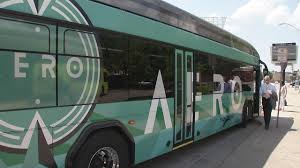
Despite limited financial resources whenever the need to optimize public transportation operational resources arises to achieve the best possible outcomes; finding ways to reduce costs, improving efficiency, and prioritizing spending is crucial.
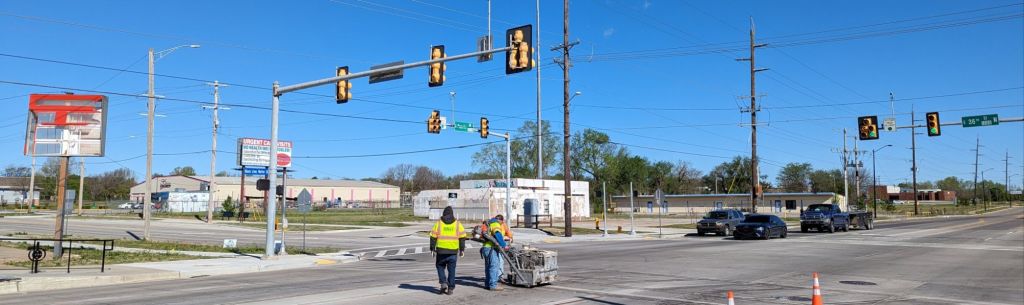

by pacetulsa
OPTIMIZING OPERATIONS RESOURCES & CONTINUITY REGULATORY COMPLIANCE SERVICES ON A CONSTRAINED BUDGET
Public Transportation Agencies must ensure that essential services are maintained while meeting regulatory requirements and safety standards.
An operating agreement between OTA and the RTMC must define agency roles, responsibilities and funding mechanisms. Operating agreements among the local agencies are required to specifically define agency roles in the management and operations of the RTMC. OTA operations should be included in the RTMC. The desired functions for OTA would include all the RTMC functions plus electronic toll collection.
The operating agreements should include negotiations on capital, operating and maintenance costs, a commitment to provide sufficient staff and maintenance resources, hierarchy of system control and use of traffic and video data and information
The Oklahoma Department of Transportation (ODOT) and the Indian Nations Council of Governments (INCOG) have identified a growing need for improved traffic management in the Tulsa, Oklahoma region. This need has been substantiated by county transportation agencies, local and state law enforcement, emergency
Local EOCs will be operated and maintained by police, sheriffs, fire, 911, and Emergency Medical Services (EMS) departments in the cities in the Tulsa region. These EOCs already exist in most cities in the Tulsa region and they would continue to function as they currently do with the addition of video and data communications with the transportation management system.
The OHP and local public safety agencies should have a center (or central point of contact) in the initial phase in order to coordinate with the RTMC. Real-time communications and video will be sent from the RTMC to the dispatch center for each participating agency and incident information is to be sent from the EOCs back to the RTMC.
Local agencies will use compatible hardware/software for communications with TMC.
The following is a list of jurisdictions that have a local 911 center: • Tulsa County • City of Tulsa (including the City of Catoosa) • City of Tulsa Emergency Medical Services Agency (EMSA) • City of Skiatook • City of Collinsville • City of Owasso • City of Sapulpa • City of Glenpool • City of Jenks • City of Bixby • City of Broken Arrow • City of Coweta • City of Sand Springs • City of Claremore The OHP – Troop B operates a call taking and dispatch center in the Tulsa region.
Through an operating agreement with the RTMC Board, OHP may operate some of the RTMC functions during the hours the RTMC is not staffed. Operating agreements are required to specifically define the role of each state and local agency.
The operating agreements will include negotiations on capital, operating and maintenance costs, a commitment to provide sufficient staff and maintenance resources, hierarchy of system control and use of traffic and video data and information.
Some local jurisdictions may choose to co-locate the operations centers of several local agencies (i.e., police, fire and 911 dispatch). Some jurisdictions may also elect to co-locate a TOC and EOC. That jurisdiction will determine the participating agencies in any jurisdiction’s center.
Some EOCs may choose to implement only select functions listed below and delay the implementation of some functions until later phases.
Functions of EOCs may include: • Real-time communications to the RTMC, local TOC, other EOCs and transit centers • Real-time video display • Real-time video camera control (based on control hierarchy) • Incident management • Vehicle tracking for emergency vehicles • Signal preemption for emergency vehicles • Dispatch for emergency vehicles • Notification of towing providers • Dispatch for HAZMAT response and cleanup • Monitoring for abandoned vehicles on the freeways • Coordination with other centers under emergency evacuation procedures
Envisioned Tulsa Regional Transportation Management Center and Functions of the Tulsa RTMC may include:
• Incident detection on freeways
• Collect traffic speed and volume data • Broken Arrow Bus System
• Tulsa School Bus System Other Agencies
• INCOG
• Tulsa International Airport
• Oklahoma Trans. Authority
• Port Authority Oklahoma Department of Transportation Division 8
• Traffic Management
• Emergency Traffic Control
• Construction Traffic Management
• ITS Planning
• Information Service Provider
• Maintenance Tulsa Regional ITS Center-to-Center Architecture
• Surveillance on freeways and major arterials (in coordination with local agencies)
• Lane assignment and control signs on freeways
• Real-time video display
• Real-time video control (based on control hierarchy)
• Development and implementation of freeway control strategies
• Incident management coordination
• Traffic data archive and data management/warehousing capabilities
• Traffic, incident and construction information dissemination capability, including DMS, HAR, Internet web site
• Operations of signs and cameras on freeways under emergency evacuation procedures (i.e. – tornados, floods, hazardous materials incidents, etc.)
• Real-time communications to local TOCs and transit centers
Real-time information to EOCs for vehicle routing
• Real-time communications to information service providers and media
• Real-time communications to interactive traveler information network (kiosks and web site)
• Real-time regional data sharing capability • Road weather detection
• Dispatch for service patrol vehicles
• Incident log for service patrol operators
• Vehicle tracking for service patrol vehicles
• Middleware that enables integration among all participating agencies
• ITS maintenance management and information tools
• Maintenance vehicle tracking (ODOT or maintenance contractor vehicles)
• Winter maintenance
• Roadway maintenance and construction
• Work zone management
• Maintenance and construction activity coordination
Measurable Data Strategy
A measurable data strategy can be a crucial tool for public transportation safety organizations and infrastructure agency employees during regulatory compliance inspections.
By implementing a data-driven approach to compliance, agencies can measure and track their progress toward meeting regulatory requirements, identify areas where improvements are needed, and ensure that compliance efforts are aligned with organizational goals.
In addition, ensuring the continuity of agency employees who are responsible for regulatory compliance is also important.
This can be achieved through ongoing training and education, as well as by developing clear policies and procedures for compliance-related tasks.
The purpose of the Tulsa ITS Implementation Plan is to identify and develop improvements to support incident management activities within the region, specifically in the areas of incident detection and verification, emergency response, traffic management and interagency coordination.
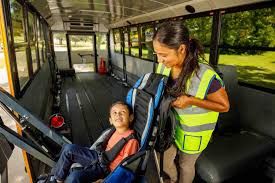
Creating a culture that rewards agency employees who are knowledgeable and well-trained in compliance requirements, agencies can more effectively manage regulatory risk and minimize the potential for compliance related issues or violations. Consider these key area foci:
- Comprehensive Public Panel Open Discussions
- Inter- or Intra-Agency Public Planning Meetings
- Online LMS Content Access Platforms
- Compliance Strategy
Municipal Challenges
Municipalities worldwide are facing mounting challenges to provide effective and efficient public transportation safety services to their citizens.
The situation is further complicated when public transportation systems are constrained, and funding is inadequate. However, there are ways to improve municipal efficacy continuity through the use of comprehensive public panel open discussions, inter- or intra-agency public planning meetings, online LMS content access platforms, and compliance strategy.

Comprehensive Public Panel Open Discussions
Comprehensive public panel open discussions are an effective way to involve the public in the decision-making process of municipalities. They allow citizens to voice their opinions and concerns on various issues that affect their lives. Municipalities can use these discussions to gather valuable feedback on their services and policies. This feedback can be used to improve the quality of services and enhance the overall efficacy of municipalities.
Inter- or Intra-Agency Public Planning Meetings
Inter- or intra-agency public planning meetings are another way to improve municipal efficacy continuity. These meetings bring together different departments within a municipality to discuss common issues and find solutions. By working together, departments can identify areas of overlap, eliminate duplication, and streamline processes. This can result in cost savings and improved efficiency.
An Intelligent Transportation System (ITS) Implementation Plan has therefore been prepared under this project to address operational and other needs within the Tulsa region.
This plan provides an introduction to ITS and background on relevant previous work. A concept of operation is included that develops the functional requirements for the region, and addresses the roles and responsibilities of the agencies involved.
The plan then develops the infrastructure requirements for the Tulsa region. Finally, an implementation strategy is presented including the definition of several projects, procurement method, funding alternatives and a schedule.
The plan incorporates ITS applications into the transportation planning, design and construction program, providing a “mainstreaming” effect. This mainstreaming of ITS into the traditional ODOT project development cycle can provide early transportation system benefits. These benefits include improved safety and reduced traffic delays and vehicle emissions.
To develop the ITS and incident management needs, several key factors need to be addressed. However, to do these things on a constrained budget means that a lot of the opportunities for improvement are radically skewed or go unaddressed.
The Tulsa ITS Implementation Plan was developed in conjunction with the Oklahoma Statewide ITS Plan to foster a coordinated approach to managing the statewide and regional transportation network. A similar plan has also been prepared for the Oklahoma City Region. Together the Tulsa and Oklahoma City regions account for much of the State’s ITS infrastructure, and as such will serve as the foundation for defining how systems and agencies will share information on a statewide level.
We have highlighted some of ITS recommendations for improvements, wants, base needs and skewed desires.
– Want Developing functional and operational requirements to support regional ITS implementation.
– Skews Defining and formulating the roles and responsibilities of the various agencies involved in operating, maintaining and coordinating the transportation management system
– Want Defining ITS devices, communications, and Transportation Management Center (TMC) infrastructure requirements, including some trade-off analyses of the various technologies available
– Want Developing concepts to advance other capital improvements that support improved incident management operations and complement ITS
– Base Identifying ITS improvements and developing ITS project descriptions
Becoming Preparing work program elements to support phasing and scheduling of ITS improvements to support roadway/capacity improvement programs underway, although budget constraints still exists that creates barriers to implementation.
– Raise Providing recommendations on how to procure ITS infrastructure in a method most likely to result in successful deployment and implementation
– Skews Identifying funding sources for implementation and operation of ITS projects
– Skews Identifying the technologies and portions of the Tulsa ITS Regional Architecture to be implemented in the next seven years
– Want satisfying the new Federal Highway Administration (FHWA) rule on National ITS Architecture (NA) conformance and consistency. The beginning steps of developing, implementing, operating and maintaining a TMC are included in this study.
The Tulsa, Oklahoma City and Statewide ITS Plans call for the establishment of a State and several regional Transportation Management Centers including a regional TMC in the Tulsa region. The Tulsa ITS Plan inventories regional ITS elements (e.g., Regional TMC, field devices, etc.) and provides a concept of operations to define how these elements will connect to share information and data in the future.
The Tulsa regional TMC will serve as the focal point of information and data exchange, and like other regional TMCs, will pass pertinent information along to the State TIC. The Tulsa ITS Implementation Plan, defines ITS operations on the regional level making it easier to define the information exchange that will occur between the Tulsa regional TMC and the State TIC.
The TMC is vital to the formation of an advance transportation management system since it is the focal point of data collection and analysis providing incident detection and verification, inter/intra-agency coordination, traveler information and a service to the public and community by improving safety, congestion, and the regional economy through management of traffic.

Online LMS Content Access Platforms
Online LMS content access platforms are useful tools for municipalities to provide training and education to their employees. These platforms allow employees to access training modules and educational materials online, at their convenience. This can be especially helpful when public transportation systems are constrained. Employees can access the materials from home, reducing the need for travel.
Compliance Strategy
Compliance strategy is an essential aspect of municipal efficacy continuity. Municipalities must comply with various regulations and laws to ensure they provide safe and effective services to their citizens. Compliance strategy involves developing policies and procedures to ensure compliance with regulations. It also involves monitoring and reporting on compliance to regulatory bodies.
Streamlining Transportation Agency Creativity
Using comprehensive public panel open discussions, inter- or intra-agency public planning meetings, online LMS content access platforms, and compliance strategy can improve municipal efficacy continuity even when public transportation systems are constrained and underfunded.
When referring to public transport agencies and streamlining processes due to constrained or under-finance budgets, what are we saying?
When referring to public transport agencies and streamlining processes due to constrained or under finance budgets, we are talking about the need to optimize operations and resources to achieve the best possible outcomes despite limited financial resources. This could involve finding ways to reduce costs, improve efficiency, and prioritize spending to ensure that essential services are maintained while meeting regulatory requirements and safety standards.
These measures allow municipalities to involve the public in decision-making, streamline processes, provide training and education to employees, and ensure regulatory compliance. As such, they are feasible options for municipalities worldwide.
Public Transportation Agency streamlined continuity regulatory compliance services
Public transportation safety organizations and associate infrastructure agency employees should be offered specific training courses and continued education to ensure that they can develop and ensure enhanced municipal efficacy, continuity, and regulatory compliance.
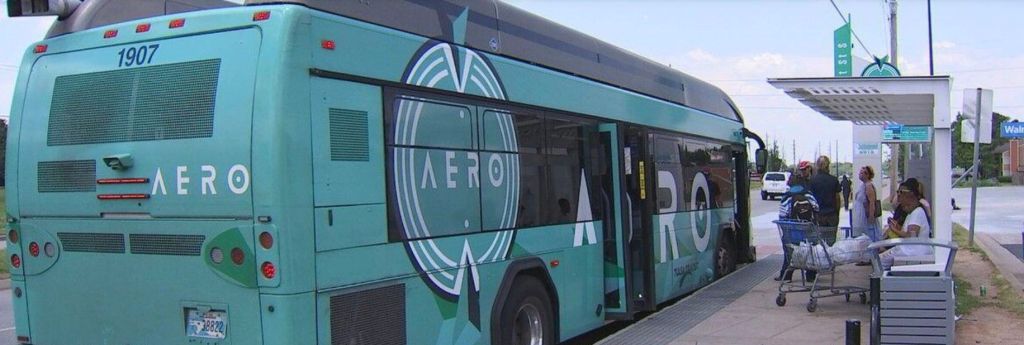
Some of the courses that could be included are:
- Safety and Security: This course could cover the basics of transportation safety and security, including risk management, emergency response, and incident investigation.
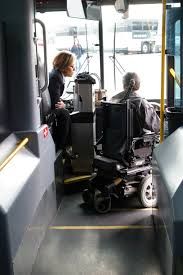
- Regulatory Compliance: This course could focus on the regulatory requirements for public transportation systems, including ADA compliance, environmental regulations, and other federal and state mandates.
- Infrastructure Maintenance: This course could provide training on the maintenance and upkeep of public transportation infrastructure, including buses, trains, stations, and other facilities.
- Customer Service: This course could provide training on how to provide excellent customer service to passengers, including communication skills, conflict resolution, and handling difficult situations.
- Technology and Innovation: This course could cover the latest technological advances in public transportation, including smart cities, connected vehicles, and other innovations that can improve efficiency and safety.
By offering these and other relevant training courses, public transportation safety organizations and infrastructure agency employees can stay up-to-date on the latest best practices, regulations, and technologies, helping to ensure the safety and efficiency of municipal transportation systems.
References:
Smith, J. (2020). Enhancing Municipal Efficacy Continuity through Comprehensive Public Panel Open Discussions. Journal of Municipal Administration, 15(2), 26-37.
Johnson, K. (2019). Inter- or Intra-Agency Public Planning Meetings: A Guide for Municipalities. Municipal Planning Quarterly, 18(4), 12-21.
Lee, S. (2018). Online LMS Content Access Platforms: A Cost-Effective Solution for Municipalities. Municipal Technology Review, 25(3), 7-15.
Brown, T. (2017). Compliance Strategy: Ensuring Municipal Efficacy Continuity. Municipal Compliance Bulletin, 12(1), 4-11.


